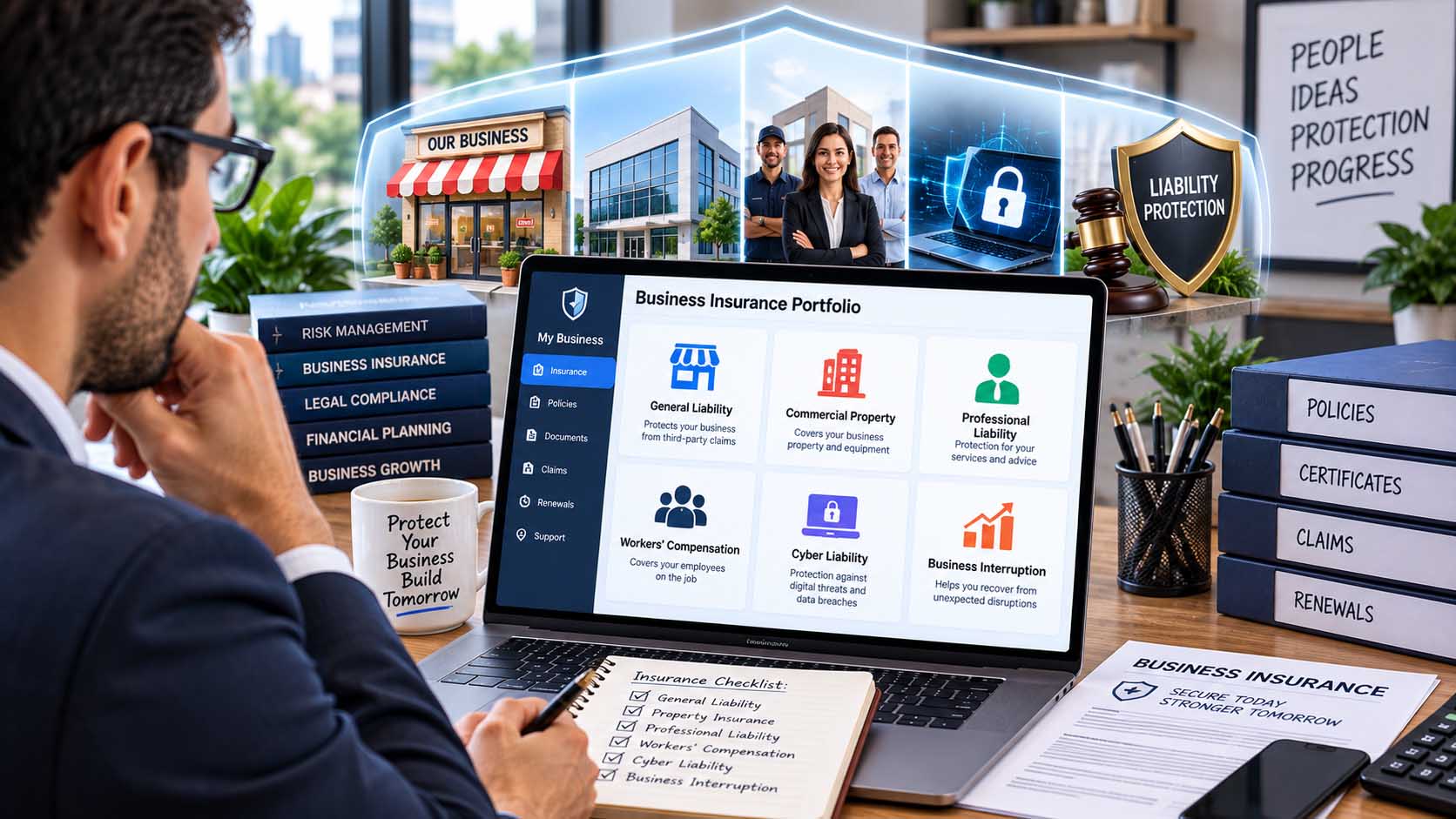
Different small business insurance types address different kinds of risk. General liability may help with certain third-party claims, commercial property insurance can address covered damage to business assets, and professional liability may apply to claims connected with professional services. Other coverage can address employees, vehicles, cyber incidents, or interruptions to business operations.
The right combination depends on what a company does, where it operates, whether it employs people, which assets it owns, and the risks created by its products or services. Insurance policies also contain specific limits, exclusions, deductibles, and conditions, so business owners should review actual policy terms rather than relying only on the name of a coverage category.
Why Small Businesses Use Different Types of Insurance
Businesses face more than one kind of exposure.
A retail store may be concerned about customer injuries and damaged inventory. A consultant may face allegations that professional advice caused a client’s financial loss. An online company may depend heavily on digital systems and customer data.
Because those risks are different, one insurance policy does not necessarily address all of them.
A useful starting point is to identify the events that could significantly affect the company and then determine which insurance products are designed to address those exposures.
General Liability Insurance
General liability insurance is one of the most familiar forms of business coverage.
Depending on the policy and circumstances, it may respond to certain claims involving third-party bodily injury, property damage, or personal and advertising injury.
For example, if a customer is injured at business premises and makes a covered claim, general liability insurance may be relevant.
However, it should not be treated as universal protection. Professional mistakes, employee injuries, damaged company property, and cyber incidents may require different forms of coverage.
Commercial Property Insurance
Commercial property insurance focuses on physical business assets.
Depending on the policy, covered property might include equipment, furniture, inventory, computers, fixtures, and other business possessions. Coverage can also depend on the causes of loss specified or excluded by the policy.
Businesses that lease premises should not automatically assume that a landlord’s insurance protects everything the tenant owns.
A company’s own equipment, inventory, improvements, and other assets may require separate consideration.
Professional Liability Insurance
Professional liability coverage can be important for businesses that provide specialized advice or services.
It is commonly associated with claims alleging errors, omissions, negligence, or failures in professional services, subject to the specific policy terms.
Consultants, designers, technology professionals, accountants, and other service providers may encounter risks that differ substantially from those faced by a store selling physical products.
For this reason, the nature of the company’s work should influence insurance decisions.
Entrepreneurs researching risk management alongside contracts, legal structure, finance, intellectual property, and other operating considerations can use GrowBizLab for more helpful hints related to practical small-business management.
Insurance requirements and policy availability vary by jurisdiction, industry, insurer, and business circumstances, so specific coverage decisions should be based on current policy information and appropriate professional guidance.
Workers’ Compensation Insurance
Businesses with employees may need to consider workers’ compensation insurance.
Workers’ compensation systems generally address qualifying work-related injuries and illnesses, but requirements vary by jurisdiction. Rules can depend on factors such as location, number of employees, type of work, and employment arrangements.
A company should therefore verify the requirements that apply where it operates rather than assuming that another business’s obligations are identical.
Commercial Auto Insurance
Businesses using vehicles for commercial activities may have exposures that personal auto insurance does not adequately address.
Commercial auto insurance can apply to qualifying vehicles used for business purposes, depending on the policy.
This may be relevant for companies involved in deliveries, transportation, field services, construction, sales visits, or other activities requiring regular vehicle use.
Owners should accurately explain how vehicles are used when discussing coverage with an insurer.
Cyber Insurance
Digital operations create another category of risk.
Companies may store customer information, process online payments, depend on cloud software, or use connected systems for daily operations. A cyber incident can therefore create technical, financial, operational, and legal consequences.
Cyber insurance policies may address certain costs associated with covered cyber events, but coverage varies considerably.
Insurance should also complement, rather than replace, basic cybersecurity practices such as access controls, backups, software updates, employee awareness, and appropriate data-handling procedures.
Business Interruption Coverage
Physical damage can affect more than the property itself. It can also prevent a company from operating normally.
Business interruption coverage, often available as part of broader commercial property arrangements, may address certain income losses and continuing expenses when operations are interrupted by a covered event.
The details matter. Not every reason a business stops operating is covered, and policies can include waiting periods, limits, and specific requirements.
Owners should understand which triggering events apply to their coverage.
A Business Owner’s Policy Can Combine Coverages
Some smaller companies may encounter a Business Owner’s Policy, commonly called a BOP.
A BOP typically combines certain common commercial coverages into one policy package, often including general liability and commercial property protection, with other coverage depending on the insurer and policy.
This can simplify insurance administration for eligible businesses, but a package should still be evaluated against the company’s actual exposures.
Convenience does not guarantee that every important risk is included.
How Should a Small Business Evaluate Its Insurance Needs?
Start with the company’s real activities rather than purchasing coverage solely because another business has it.
Consider questions such as:
- Does the public visit the business premises?
- Does the company own valuable equipment or inventory?
- Does it provide professional advice or specialized services?
- Does it employ workers?
- Are vehicles used for business purposes?
- Does the company collect or store sensitive data?
- Could a covered physical loss interrupt operations?
- Do contracts require particular insurance coverage?
These questions help connect insurance decisions with specific operational risks.
Review Coverage as the Business Changes
Insurance needs can change as a company develops.
Hiring employees, leasing premises, purchasing equipment, adding professional services, acquiring vehicles, handling more customer data, or entering new contracts can introduce exposures that did not exist when the original policies were purchased.
Business owners can therefore benefit from reviewing coverage periodically and after significant operational changes.
The purpose of small-business insurance is not to eliminate every business risk. Instead, appropriate coverage can form one part of a broader risk-management strategy that also includes clear contracts, safe operating practices, financial planning, cybersecurity, compliance, and well-organized business processes.