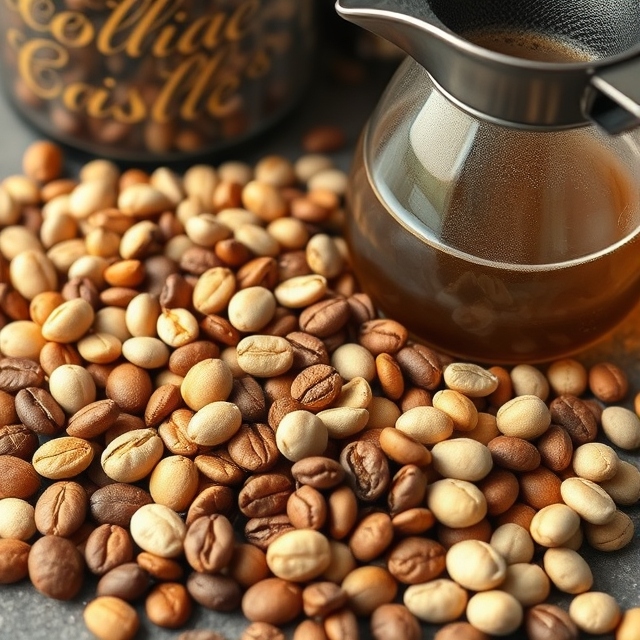
Lightly roasted coffee covers a broad range of roast levels, but blonde roast, conventional light roast, and white coffee are not necessarily interchangeable terms. They all involve less roast development than medium or dark coffee, yet the differences in heat exposure, bean appearance, texture, and flavor can be significant.
Understanding these terms makes it easier to choose coffee based on the experience you want rather than relying only on labels.
What Is Lightly Roasted Coffee?
Lightly roasted coffee is coffee that has received relatively limited roasting compared with medium or dark roast beans. The beans usually retain more of their original characteristics, while the roasting process contributes less of the deep toasted and smoky character associated with darker coffee.
The exact definition of a light roast can vary between roasters. That is one reason the terms blonde roast, light roast, and white coffee can sometimes create confusion.
A light roast may still be clearly brown and fully developed as a roasted coffee. White coffee, by contrast, generally refers to an exceptionally light roast that remains much paler and can have a noticeably harder, denser structure.
Blonde Roast vs Light Roast
Blonde roast is often used as a name for a very light roast, although the terminology is not completely standardized across the coffee industry.
A blonde roast may have a pale brown appearance and a relatively delicate roasted character. Depending on the beans and roasting approach, it can preserve noticeable acidity, fruit characteristics, floral aromas, or other qualities associated with the original coffee.
A conventional light roast can occupy a similar part of the spectrum while being somewhat more developed.
The important point is that “blonde roast” does not automatically identify one precise roast temperature or development time. The name describes a style, but individual roasters may use different profiles.
Where Does White Coffee Fit?
White coffee is generally positioned at the extremely light end of roasting.
Unlike many blonde or light-roasted coffees, white coffee can have a very pale, almost yellowish appearance. The beans may also remain considerably harder and denser because they have experienced less structural change during roasting.
This physical difference matters when preparing the coffee. A very light, dense bean can be more difficult for a basic home grinder to process than a conventional roasted bean.
For readers exploring the characteristics of this unusually light style, white roast coffee provides another example of how an exceptionally light roast can differ from more familiar coffee styles.
How Roast Development Changes Flavor
Roasting does more than change the color of coffee beans. Heat drives a series of physical and chemical changes that influence aroma, texture, and flavor.
With less roast development, the characteristics of the original green coffee can remain more noticeable. Depending on the bean, a lightly roasted coffee may have floral, fruity, grassy, grain-like, nutty, or tea-like qualities.
As roasting progresses, roasted flavors become more prominent. Medium and dark coffees may develop stronger toasted, caramelized, cocoa-like, smoky, or bittersweet characteristics.
This does not mean that one roast level has a universally better flavor. It means that roast development changes which characteristics are most noticeable in the cup.
Why Do Lightly Roasted Beans Feel Harder?
Roasting changes the physical structure of a coffee bean. As beans develop through roasting, they become more brittle and easier to break apart.
Exceptionally light-roasted beans have undergone less of this transformation. As a result, they can remain unusually dense and hard.
This is particularly relevant for home preparation. A grinder designed for ordinary roasted coffee may struggle with very dense beans, especially if its burrs or motor are not intended for that type of workload.
For this reason, some white coffee products are offered pre-ground rather than requiring the consumer to grind the beans at home.
Does Light Roast Mean More Caffeine?
Roast color alone cannot determine the exact caffeine content of a cup.
Caffeine is influenced by factors including the coffee species, amount of coffee used, serving size, grind, brewing method, and extraction. The difference between roast levels should therefore not be reduced to a simple rule that lighter coffee always contains more caffeine.
If caffeine is the primary concern, it is more useful to consider the complete preparation rather than judging the cup solely by bean color.
How Does Brewing Change?
Lightly roasted coffee can respond differently to brewing variables than darker coffee. Grind size, water temperature, contact time, and brewing method all influence extraction.
For example, espresso requires fine grinding and controlled extraction through a pressurized brewing system. Drip coffee uses gravity and a longer contact period, while French press brewing relies on immersion.
Very lightly roasted coffee can also behave differently because of its density and structure. A brewing recipe developed for a dark roast may need adjustment when used with an unusually light roast.
The goal is to extract enough desirable flavor without allowing the cup to become excessively sharp, weak, bitter, or otherwise unbalanced.
A Simple Way to Understand the Terms
Think of the terminology as a range rather than a set of perfectly standardized boxes:
- Dark roast: extensive roast development and strong roasted flavors.
- Medium roast: balanced roast development with both bean and roast characteristics.
- Light roast: limited roast development and greater emphasis on original bean characteristics.
- Blonde roast: commonly used for a very light roast, although definitions vary.
- White coffee: generally an exceptionally light roast with a much paler appearance and harder bean structure.
These descriptions are useful for orientation, but individual roasting profiles can vary.
Which Style Should You Try?
If you enjoy familiar roasted flavors, a medium or dark roast may be closer to what you already know. If you prefer brighter or more distinctive characteristics, a light or blonde roast may be worth exploring.
White coffee is a different experience again. Its unusually low roast development, pale appearance, dense beans, and distinctive flavor profile make it particularly interesting for people who want to explore coffee outside conventional roast levels.
Ultimately, roast terminology is a starting point rather than a complete description. Origin, processing, bean variety, roasting technique, grind, and brewing method all contribute to what eventually appears in the cup. Understanding those relationships makes terms such as blonde roast, light roast, and white coffee much easier to interpret.