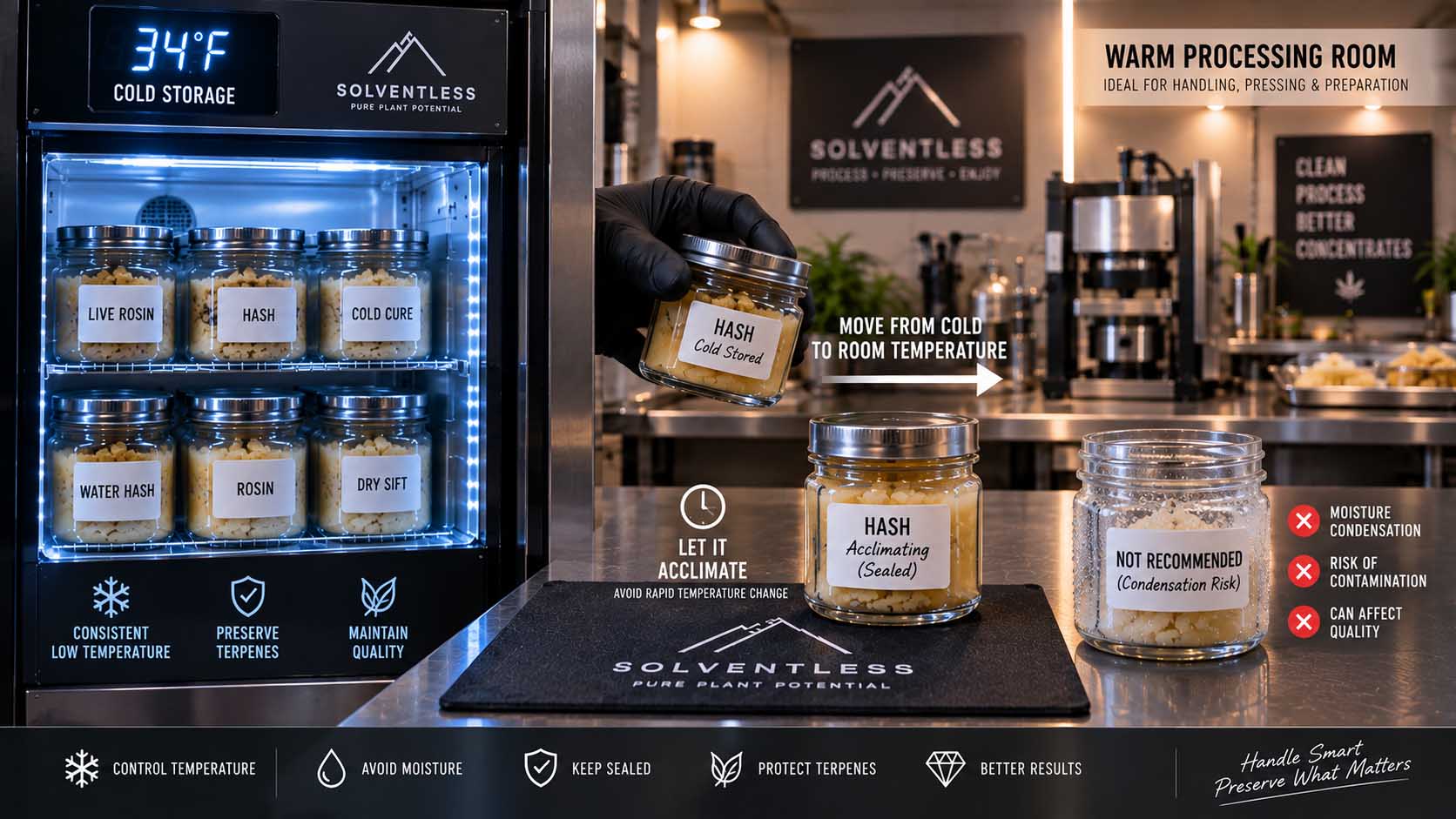
Condensation risks in cold storage become important when hash, rosin, or other concentrates are moved from a cold environment into a warmer processing room. The safest general approach is to keep a cold container sealed while its temperature gradually adjusts to the surrounding environment. Opening it too quickly can expose cold interior surfaces and concentrate to warmer, moisture-containing air.
Understanding why this happens makes it easier to build a consistent handling procedure around refrigerated concentrate storage.
Why Does Condensation Form After Cold Storage?
Condensation forms when warm air containing water vapor encounters a surface cold enough for some of that vapor to become liquid.
A familiar example is moisture appearing on the outside of a cold bottle after it is removed from a refrigerator. The water did not necessarily come through the bottle; it formed because the surrounding air contacted the cold exterior.
Concentrate containers can experience the same basic process.
External condensation on a sealed jar is different from exposing the material inside. The greater concern occurs when a cold container is opened before it has sufficiently adjusted to the warmer environment.
Warm air can then enter the container and contact colder internal surfaces.
Keep Concentrate Containers Sealed During the Transition
A straightforward way to reduce unnecessary exposure is to leave the container closed during the cold-to-warm transition.
Instead of removing a jar from refrigeration and opening it immediately, allow the sealed container to move toward an appropriate handling temperature first.
How long this takes depends on several factors, including:
- The original storage temperature
- Room temperature
- Ambient humidity
- Container size and material
- Quantity of concentrate inside
- How cold the contents remain
Because these conditions vary, there is no single acclimation time that applies to every facility or container.
The important principle is to manage the transition rather than automatically opening the product as soon as it leaves storage.
Reduce Condensation Risks in Cold Storage With a Clear Procedure
Professional operators can make concentrate handling more consistent by defining a standard removal process.
A simple workflow may be:
Cold storage → remove required container → keep sealed → allow controlled temperature adjustment → inspect exterior → open when appropriate → handle concentrate
This procedure is easy to understand and can be applied consistently by different staff members.
It also treats removal from storage as part of the storage system itself rather than as an unrelated step.
Stable Storage Provides a Predictable Starting Point
Cold-to-warm handling becomes easier to manage when concentrates begin in known storage conditions.
If the storage environment fluctuates considerably, operators have less certainty about the starting temperature of each batch. A more controlled system allows handling procedures to be planned around a defined environment.
For professional operations managing hash, rosin, and similar products, temperature-controlled concentrate storage can provide a dedicated environment for maintaining concentrates before they are transferred back into the processing or handling area.
The Pro Muta Mini Fridge is relevant to this type of workflow because it is designed around precision temperature management rather than leaving concentrate conditions entirely dependent on the surrounding room.
However, controlled refrigeration is only one part of the process. The way containers are packaged, removed, acclimated, and opened remains equally important.
Avoid Unnecessary Cold-to-Warm Cycling
A container that repeatedly moves between refrigeration and a warmer room goes through multiple environmental transitions.
This may happen when staff need only a small amount of concentrate but repeatedly remove an entire batch from storage.
Organizing material according to expected access can make the workflow more efficient.
For example, a processor may separate a practical working quantity from reserve material when appropriate. The working container can support routine access, while reserve containers remain under stable storage conditions until needed.
This reduces unnecessary handling of the full batch.
Use Containers That Support the Storage Workflow
Containers form the immediate barrier between the concentrate and the surrounding environment.
They should close securely, suit the material being stored, and be appropriate for the intended temperature conditions.
Container size should also match operational needs. Oversized containers holding material that requires frequent access may create more handling than necessary.
Clear labels can further reduce unnecessary opening. A label may identify the batch, product type, storage date, and processing status so staff do not need to open containers simply to determine what they contain.
Consider Room Temperature and Humidity
The storage temperature is only one side of the transition.
The processing room matters as well.
Moving a cold jar into a relatively cool environment creates a different transition from moving it into a warm, humid workspace. Seasonal changes can also alter room conditions even when the cold-storage settings remain unchanged.
Therefore, a complete handling procedure should consider both environments.
Operators can think of the process as a temperature pathway:
Controlled cold environment → sealed acclimation → processing environment → concentrate handling
This makes it easier to identify where abrupt environmental changes occur.
What Should You Do If Condensation Appears Outside the Jar?
Visible moisture on the exterior of a sealed cold container does not automatically mean the concentrate inside has become wet.
The moisture may simply be condensation formed from the surrounding air.
Keep the container sealed while it continues adjusting to the room environment. The exterior can then be managed according to normal cleanliness and handling procedures before the container is opened.
Opening the jar simply to check the contents can defeat the purpose of keeping the cold material isolated from warmer ambient air.
Storage and Handling Should Work as One System
A professional storage procedure should cover more than placing concentrates into refrigeration.
It should define how material is packaged, labeled, organized, accessed, removed, acclimated, opened, and returned to storage when necessary.
Batch records can also help staff know which containers need to be accessed without disturbing unrelated inventory.
For businesses handling multiple concentrate batches, these operational details can be just as important as the storage equipment itself.
Reducing condensation risks when moving concentrates from cold storage ultimately depends on controlling the transition between environments. Keeping containers sealed while they adjust, limiting unnecessary temperature cycling, using suitable packaging, organizing batches according to access needs, and considering room conditions can create a more predictable handling process for hash and rosin.